
 # Keep Your Fridge Running: Simple Backup Power Solutions for Homeowners
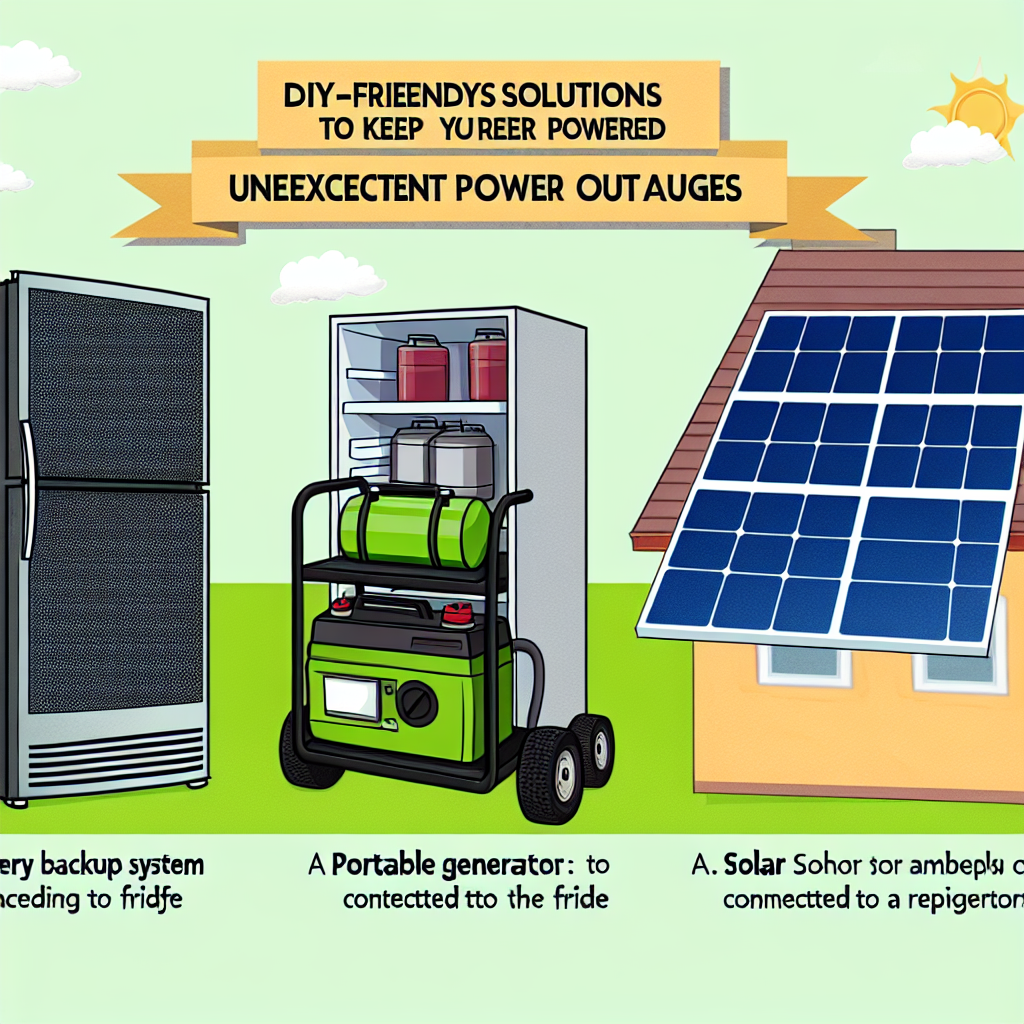
As a millennial or Gen X homeowner, one of the worst experiences is coming home after a storm or power outage to find spoiled food in your fridge. If you’re not ready to invest in a whole-house generator, the good news is that there are simple and cost-effective solutions to keep your fridge powered during those unexpected outages. Let’s explore some DIY-friendly options to add backup power to your kitchen.
## Understanding Your Needs
Before diving into solutions, it’s crucial to assess your specific needs. Your primary goal is to ensure that your refrigerator operates during power interruptions, which can be as short as a few hours or as long as several days.
### Consider the Duration of Outages
The length of time you want to keep your fridge running will dictate the type of solution you choose. For short outages, a smaller backup power system might suffice, while longer outages might require more robust solutions.
## Battery Backup Systems
### UPS (Uninterruptible Power Supply)
UPS units are commonly used for computers, but they can also power smaller appliances like refrigerators. A UPS can provide a seamless transition during power outages, giving you time to safely store your food elsewhere or switch to another solution.
**Pros:**
– Easy to set up and use
– Provides immediate backup power
– No complex installation necessary
**Cons:**
– Limited run time depending on the UPS unit
– Typically designed for short outages
### DIY Battery Backup
If you’re comfortable with a little DIY work, you can create your own battery backup system. This involves connecting a deep cycle battery to an inverter, allowing you to convert DC power from the battery to AC power for your refrigerator.
**Follow these steps:**
1. **Gather Your Materials**: You will need a deep cycle battery (choose one rated for at least 100Ah), a pure sine wave inverter (at least 1000W), appropriate cables, and a battery enclosure for safety.
2. **Set Up Your Inverter**: Connect your inverter to the battery, according to the manufacturer’s instructions to avoid accidents. Make sure to connect the positive (+) terminal of the inverter to the positive (+) terminal of the battery and do the same for the negative (-) terminal.
3. **Test the Setup**: Before relying on it during an outage, test the system by plugging the fridge into the inverter while the battery is charged. Ensure everything runs smoothly.
**Pros:**
– More customizable for your power needs
– Can provide power for extended outages with larger batteries
**Cons:**
– Requires some electrical knowledge
– More initial setup work than a pre-built UPS
## Generator Solutions
### Portable Generators
If you’re looking for a bit more power, a portable generator can be an excellent option. These generators can easily supply enough electricity to keep your fridge and other essential appliances running during outages.
– **Fuel Options**: Some portable generators run on gasoline, while others may be powered by propane or natural gas. Choose one that fits your fuel availability and safety preferences.
**Tips for Use**:
– Always follow safety precautions, including keeping the generator outdoors to avoid carbon monoxide buildup.
– Consider purchasing a transfer switch for safer connections to the home without risking overloads or electrical issues.
**Pros:**
– Can power multiple appliances, not just your fridge
– Versatile for use during camping or other events
**Cons:**
– Requires maintenance and fuel management
– Can be expensive up front, especially for higher wattage models
## Solar Solutions
### Solar Battery Backup Systems
If you’re interested in renewable energy, a solar battery backup system is an innovative way to keep your fridge running during power disruptions.
**Setup**: Purchase a solar panel (at least 300W) and a compatible storage battery (lithium batteries are light and efficient). The system can be set up to charge the battery during the day and draw power from the battery for your refrigerator at night or during outages.
**Pros:**
– Energy-efficient and eco-friendly
– Offers a sustainable backup power option
**Cons:**
– Higher initial investment
– May require professional installation unless you’re DIY-savvy
## Implementing Your Backup Solution
Once you have decided on the backup solution that best fits your needs and budget, the next step will be to implement it effectively.
### Installation and Testing
1. **Follow Instructions**: Adhere to all manufacturer instructions during setup to ensure safety.
2. **Conduct Tests**: Once installed, simulate a power outage (by unplugging your refrigerator for a short time) to ensure your system operates as expected.
### Regular Maintenance
Regular maintenance of your backup power solution is crucial, whether you choose a battery system, generator, or solar backup. Periodically check connections, charge batteries, and ensure that all parts are functioning correctly.
## Takeaway: Stay Prepared!
Investing in a backup power solution for your fridge not only protects your food but gives you peace of mind during unexpected outages. Whether you opt for a simple UPS, a DIY battery backup, or a more robust generator system, ensuring your fridge stays powered is an essential part of home management. Remember: the right solution depends on your unique circumstances, so choose wisely, stay informed, and keep your home running smoothly!
Armed with this guide, you’re now ready to tackle backup power for your fridge in a practical and resourceful manner. Happy DIY-ing!
### Evaluation Question:
As you consider your backup power options, what steps are you taking today to assess your skill level and readiness for tackling one of these projects?
Leave a Reply